
 TRISOLEGY
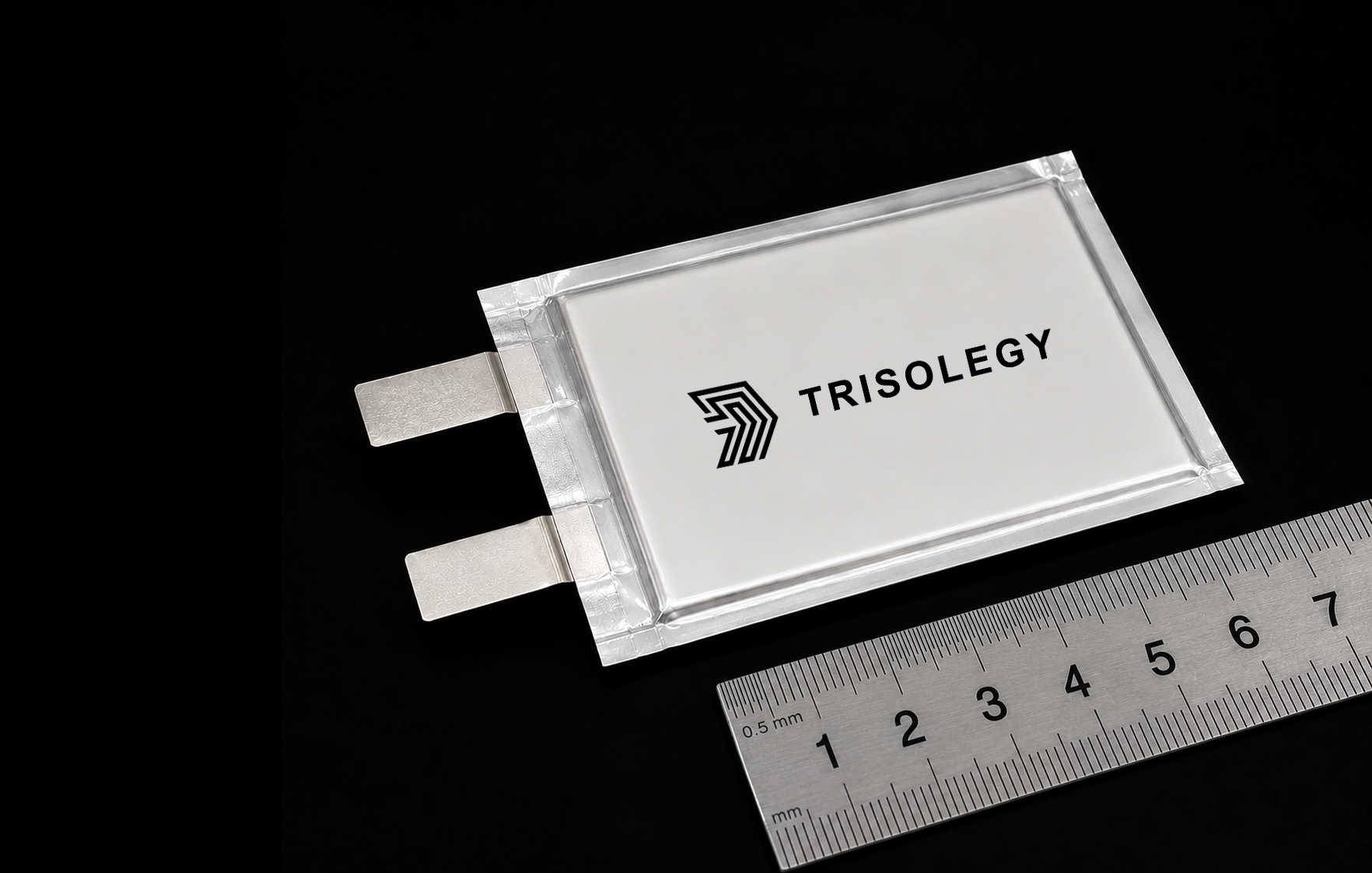
Trisolegy is developing thin-film solid-state battery cells based on Physical Vapor Deposition (PVD) technology. By sputtering solid electrolyte layers directly onto current collectors in vacuum, we eliminate the need for liquid electrolytes — improving safety, enabling thinner cell designs, and expanding the operating temperature range.
Our R&D focuses on three classes of solid electrolyte materials, each deposited as a pinhole-free ceramic film of 1–5 µm thickness. The process takes place in a multi-target magnetron sputtering cluster tool, where anode, electrolyte, and cathode layers are deposited sequentially without breaking vacuum — ensuring clean interfaces and minimal contamination.
Target applications include space power systems (satellite energy storage), low-temperature environments (arctic, high-altitude), and high energy-density portable applications where conventional Li-ion cells reach their limits.
Target >400 Wh/kg at cell level — enabled by Lithium metal anode and thin-film SSE layers replacing conventional separator + liquid electrolyte.
Operating from −40 °C to +85 °C. Solid electrolytes avoid the electrolyte freezing issues of liquid-based cells at low temperatures.
Solid-state interfaces may enable 2–4 C charge rates without Lithium dendrite formation — under validation.
No flammable liquid electrolyte. Eliminates thermal runaway risk, leakage, and separator degradation — intrinsically safe.